Retail cleaning services Anaheim

Retail and Shopping Center Cleaning in Anaheim

Retail is judged in the first ten feet. We clean stores, strip centers, and shopping centers across Anaheim and Orange County, with the scope weighted toward the entry, the main traffic lanes, the fitting rooms, and the restrooms, and with visits timed around your trading hours. Call 657-999-1949.

✓Written scope✓Flexible scheduling✓Anaheim & Orange County
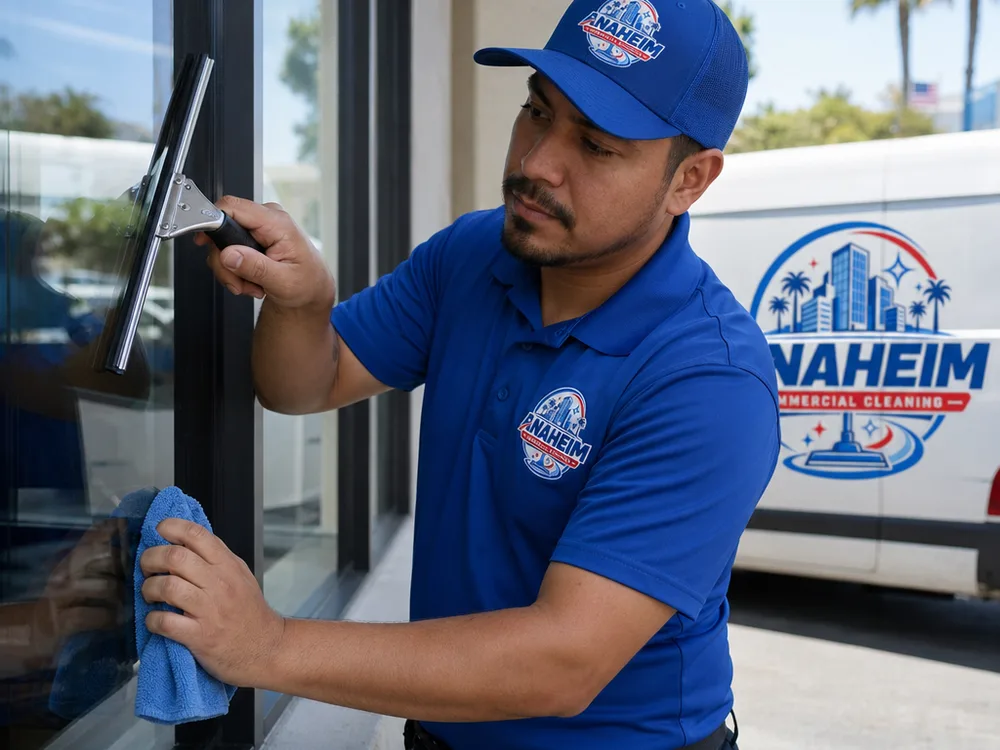
Entry glass and floors being cleaned in an Anaheim retail space

The entry decides what a shopper expects

Handprints on the door glass, a scuffed threshold, and a matting system that stopped working three seasons ago do more damage to a store's presentation than anything further inside, because the shopper sees them before they see the merchandise.

We treat the entry as its own scope item: door glass inside and out including the frames and push plates, the threshold and track, the sidewalk immediately outside where gum and drink spills collect, and the mats.

Matting is worth being specific about. A center's worth of grit arrives on shoes, and mats are the only thing stopping it reaching your sales floor. A scraper mat outside and an absorbent mat inside, long enough for several footfalls each, will hold most of it. Mats that are saturated, curled, or too short do not. We vacuum both faces and lift them to clean the floor underneath, which is where the grit that came off them sits. Where a store has ongoing tracking problems, changing the matting run is cheaper than cleaning the floor more often.
Sales floor lanes, not floor area

Retail floors do not wear evenly. Traffic concentrates in a loop from the entry through the main aisle to the register and the fitting rooms, and that lane can carry ten times the footfall of a corner fixture display. Cleaning the whole floor at one frequency either over-serves the corners or under-serves the lane.

So we scope by lane

The main path gets daily attention, dust-mopped and damp-mopped or auto-scrubbed depending on size and surface. Secondary areas run on a lower frequency. Polished concrete, LVT, sealed hardwood, and VCT each want a different pad and a different chemical dilution, and getting that wrong on a polished surface leaves a haze under the store's lighting that is visible from the door.

Retail lighting is unforgiving

Track and spot lighting rakes across the floor at a low angle and shows every streak, swirl mark, and dried mop line that overhead fluorescent lighting in an office hides completely. It is the main reason a floor that looked acceptable at 11pm looks poor at opening, and the reason we finish floors with clean water and clean pads rather than the last of the bucket.

Fixture and display dust is the other detail that gets missed

Shelf edges, the tops of low fixtures, mannequin bases, and the slatwall channels all collect dust that reads as stale stock.

Fitting rooms and restrooms, where complaints come from

Fitting rooms are small, enclosed, heavily used, and the place a customer is most physically exposed to the surfaces around them. Scope covers the mirror, edge to edge, the bench or stool including underneath, hooks and rails, the door or curtain track and the door handle, the walls at hand and shoulder height, corners where pins and tags collect, and the floor into the corners rather than the middle. Where fitting rooms are carpeted, they need extraction on a periodic cycle. Nobody who has ever cleaned one will argue with that.

Customer restrooms in retail take heavier and less careful use than office restrooms, and they take it in bursts. Where hours allow, a mid-day check beats a single overnight clean: restock, fixtures, mirror, floor, and empty the trash before it overflows rather than after.

Check Availability
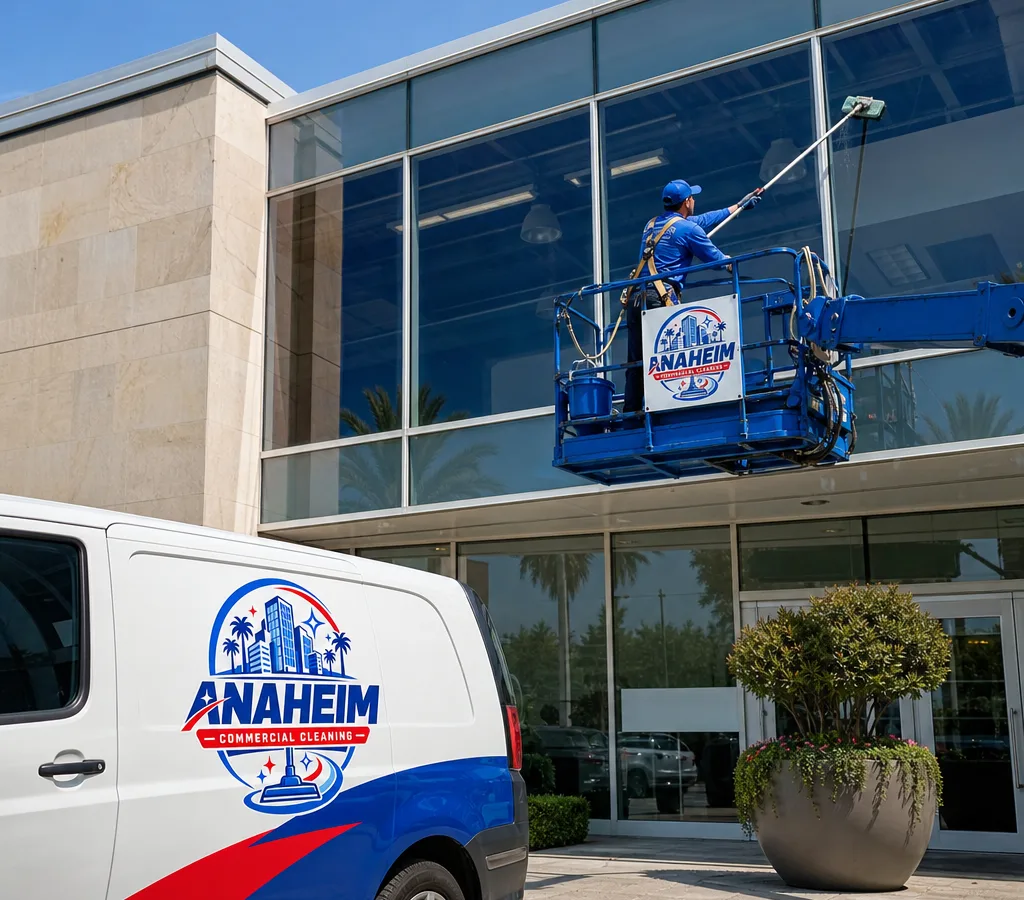
Glass and surfaces being cleaned in an Anaheim commercial space

Cleaning around trading hours, including December

Retail hours leave a narrow window, and it moves. Most of our retail clients are cleaned either after close, between roughly 9pm and 2am, or before open in the early morning, with the choice driven by which makes the floors look right at opening rather than which is cheaper.

Extended and seasonal hours change that. From late November a center that normally closes at 9pm may run to 11pm and open at 7am, which can shrink a four-hour window to two. Spring sale weekends, back-to-school, and any center-wide event do the same on a shorter scale. We plan those periods in advance, usually with additional labor on the same window rather than a compressed scope, and we would rather agree that in October than negotiate it in week two of December.

Day porter coverage suits centers and larger stores through peak season: restrooms checked hourly, entry glass kept clean, spills handled immediately, and food court tables turned over. It is the difference between a center that holds up through a Saturday and one that does not.

Back of house: cardboard, dust, and the break room

Stockrooms rarely get cleaned and always need it. Cardboard dust from carton breakdown coats shelving, settles on stock, and travels onto the sales floor on staff clothing and hand trucks. Receiving areas collect strapping, shrink wrap, pallet splinters, and pallet-jack tire marks. Break rooms in retail get hard use in short bursts and are the first thing staff notice going downhill.

Our back-of-house scope covers receiving and stockroom floors, shelving dust on a periodic cycle, break room surfaces and appliance exteriors, employee restrooms, and the trash and cardboard staging area including the compactor or dumpster surround. Keeping the dumpster surround clean matters more than it sounds: it is where pest problems start, and pests reach the sales floor.

Shopping centers: common areas and shared responsibility

A center has its own scope beyond the individual stores, and it is worth writing down which side of the line each item falls on before a contract starts.

  • ✓Common area work covers mall or breezeway floors, entry vestibules, seating and planters, handrails and elevator or escalator surrounds where present, directories, common restrooms, and food court tables, trays, and the floor under and around them. Food courts need degreasing attention closer to a restaurant than a retail floor, because cooking grease travels out of the tenant spaces into the common area and makes the floor slick.
  • ✓Exterior scope covers sidewalks, entry aprons, trash receptacles, gum removal, and the parking lot cart corrals and islands. Pressure washing of walkways and entries runs on its own periodic cycle.
  • ✓We can work for the center's management on common areas, for individual tenants on their own units, or both, and it helps to be explicit about which. Tenants often assume the center covers their storefront glass; centers usually assume the tenant does.

What drives the price

Traffic volume, not square footage. A high-volume store needs the same lane cleaned more often than a quiet one of identical size.

Floor surface and finish. Polished concrete and LVT are quick to maintain and unforgiving of error. VCT that needs periodic strip-and-wax carries a recurring cost that polished concrete does not.

Restroom count and whether they are customer-facing. Public restrooms drive frequency more than any other single item.

The window and the hours. A two-hour window before open costs more per visit than an unhurried overnight one, because it takes more people at once.

Common areas versus in-line units. Center scope prices per area with its own frequency table; tenant scope prices per unit.

Seasonal peaks. Extended hours in November and December, and event weekends, are normally priced as a scheduled uplift rather than an emergency call-out.

Periodic work. Floor restoration, carpet and fitting room extraction, high dusting, pressure washing, and exterior glass are quoted as separate items on their own intervals.

Request a Quote

Questions store and center managers ask

Can you clean while we are open?

Yes, as a day porter or mid-day service, and it works well for restrooms, entries, and spills. Floor work and detail cleaning belong outside trading hours.

Who cleans our storefront glass, us or the center?

Whatever your lease says, and it varies. We are happy to quote it either way, and to tell you what we see when we walk it so the question gets settled.

Our polished concrete looks cloudy under the spotlights. Can that be fixed?

Usually. Cloudiness on polished concrete is normally residue from the wrong chemical or too strong a dilution, and it comes off with a correct-pH cleaner and clean water. If the polish itself is worn, that is a restoration job and we will say so.

Do you handle the trash compactor area?

The surround, yes: sweeping, spill cleanup, pressure washing on a cycle. Hauling and servicing the compactor stays with your waste contractor.

Can you add hours for the holidays?

Yes, and we prefer to agree it in the fall. Extended trading hours plus higher traffic normally needs both more frequent service and a longer visit.

How do you handle keys and alarms for an overnight crew?

Keys or codes are issued to named supervisors, logged, and returned when staff change. We will follow your center's after-hours access and check-in procedure.

What about gum on the sidewalk?

Part of exterior scope, removed with a steam or hot-water method on a periodic cycle. Scraping alone marks the concrete.

Tell us your trading hours, your floor surface, and whether you need in-line unit service or center common areas.

Check Availability

Get a retail cleaning quote

We will walk it and quote the scope in writing. Anaheim Commercial Cleaning, 4091 E. La Palma Ave, Anaheim, CA. Call 657-999-1949.

Request a quote

Tell us about your facility

Send the building type, approximate size and how often you want service. We will reply with a walkthrough time.