The high-touch set is where most rooms are under-cleaned. Door handles on both sides, light switches, the exam light handle and adjustment arm, stool seat and height lever, computer keyboard and mouse surfaces where your policy allows, drawer and cabinet pulls, the blood pressure cuff mount, faucet handles and soap and towel dispensers, and the guest chair arms. Wiping the counter and the table and calling the room done is the most common gap we find when we take over a building.
Medical facility cleaning Anaheim
Medical Facility Cleaning in Anaheim
A medical building asks two things of a cleaning crew at once: control what moves between rooms, and keep the patient-facing space looking cared for. We clean clinics, medical offices, dental practices, urgent care, imaging centers, and specialty suites across Anaheim and Orange County. Call 657-999-1949.
✓Written scope✓Flexible scheduling✓Anaheim & Orange County
Two problems sharing one building
The clinical half of your building is about transfer. Soil, and whatever travels with it, moves on cloths, mop water, gloves, cart wheels, and hands. Cleaning that ignores transfer can leave a room measurably worse than before it was touched, because a single cloth wiped across four surfaces has distributed whatever was on the first one.
The public half is about what patients read into the space. A waiting room with dusty vent grilles, a smudged reception glass, or a restroom out of paper tells a patient something about the practice that has nothing to do with the care they are about to receive. Both halves matter, and they need different attention rather than the same attention applied twice.
Exam rooms and the turnover clock
Exam rooms are cleaned to a sequence, top down and clean to dirty, so nothing already finished gets recontaminated. In practice that means: dispose of visible waste, clear and wipe the counter and sink area, disinfect the high-touch set, wipe the exam table including the sides and base rather than just the top, then finish with the floor.
Contact time is the other. A disinfectant that needs four minutes wet does nothing in forty seconds. Where your product requires a longer dwell than the routine allows, we either switch to a product matched to the interval or build the extra time into the room sequence. We will use whatever product your practice has standardized on.
Tools that do not travel
We run color-coded microfiber. A given color is assigned to a zone, restrooms have their own, clinical rooms have their own, and public areas have their own, and a cloth does not cross that line. Cloths are folded to give several clean faces and are dropped into a soiled bag as they load, not rinsed in a bucket and reused.
The same logic applies to mopping. Flat mop pads are changed by room or by area rather than carried through the building in one bucket of water that gets dirtier with every room. Restroom mop heads and equipment stay with restrooms permanently. Carts are wiped down at the end of each shift, because a cart handle is a touchpoint too.
This is procedure, not equipment we are selling. It costs slightly more in laundry and slightly more in time, and it is the part of medical cleaning that actually distinguishes one vendor from another.
Check Availability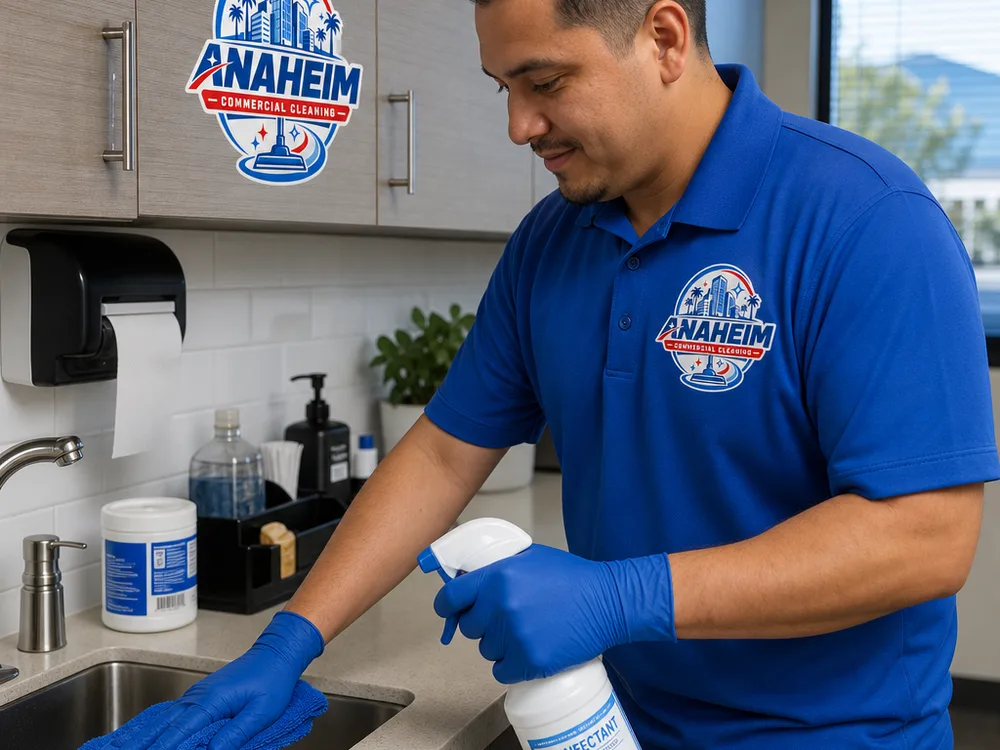
Routine cleaning and terminal cleaning are different jobs
Routine, or between-patient, cleaning is what happens in the course of a normal day and at the nightly visit: waste, touchpoints, surfaces, floors, restocking.
A terminal clean is a full strip of the room: everything removed from surfaces, walls and fixtures and vents addressed, equipment exteriors disinfected, floor edges and corners done, often on a periodic cycle or after a specific event. It takes several times as long per room and it needs the room out of service.
Most practices we work with run nightly routine cleaning with terminal-level work on a defined rotation, so that every room gets the full treatment on a cycle rather than all at once. Procedure rooms, treatment rooms, and anything where your own infection-control policy sets a standard are scoped to that policy, and your policy wins over our default checklist every time.
Waiting rooms, reception, and shared restrooms
Waiting areas need more than vacuuming. Chair arms and seat backs carry the same touch volume as anything clinical. Fabric upholstery in a waiting room needs periodic extraction; vinyl and coated fabrics need a wipe-down on a set frequency, not only when visibly soiled. Magazine tables, kids' corners where they exist, water stations, vent grilles, and the tops of door frames all collect dust that reads as neglect.
- ✓Reception is a boundary space. Glass and counter on the patient side, and on the staff side only the surfaces your team has agreed to. Desks with paperwork on them are wiped around, not cleared. We leave patient-facing glass streak-free, which for most reception windows means a clean squeegee or a dedicated glass microfiber rather than a spray-and-wipe.
- ✓Restrooms get first-in, fixed-sequence treatment: stock dispensers, disinfect fixtures and touchpoints, then floor, with the grout line at the base of fixtures addressed rather than mopped past. Odor in a clinic restroom is almost always grout, a dry floor drain, or a splash zone behind the toilet, and all three are solvable.
What stays with your existing providers
Regulated medical waste stays entirely with your licensed waste provider. We do not handle red bag waste, sharps containers, pathological waste, or anything requiring manifested disposal, and we do not move full containers. Our crews handle general trash and recycling only, and they are instructed to stop and report rather than touch anything they are unsure about.
We also do not clean the interiors of autoclaves or sterilizers, reprocess instruments, or touch anything involved in sterile processing. Instrument reprocessing is your staff's regulated responsibility and we stay out of it.
Nor do we claim credentials. We do not hold, and do not advertise, certification or accredited status in healthcare cleaning, and we will not tell you a contract makes your practice compliant with anything. What we can do is describe our procedures plainly, use the products and follow the protocols your practice specifies, and document each visit so your own compliance program has a record. Any vendor telling you their janitorial contract delivers regulatory compliance is selling something they cannot deliver.
Scheduling around a patient schedule
Most practices we clean are serviced after the last patient leaves, which in Orange County often means a 6pm to 10pm window. Urgent care and extended-hours clinics get a different arrangement: a light day presence for restrooms, waiting areas, and spills, with the clinical detail done in whatever overnight or early-morning gap exists.
- ✓Buildings with shared corridors and a landlord-controlled entrance need access agreed with property management before the first visit. We work that out during the walk-through rather than on the first night.
- ✓Where a room cannot be entered, it is logged rather than skipped silently, and it goes to the front of the next visit. You should know which rooms were and were not done, and an honest log is more useful than a clean-looking one.
What drives the cost
Room count and room type. Exam and procedure rooms carry far more labor per square foot than offices or corridors, so twelve exam rooms and twelve private offices in the same footprint price very differently.
Your protocol. A practice specifying longer contact times, specific products, or terminal-level work on a short rotation is buying more crew hours.
Touchpoint frequency. Nightly is standard. Twice-daily touchpoint rounds during respiratory season, or a day porter through open hours, add real cost and are worth it in some buildings and not in others.
Hours available. A tight window after close needs more people on site at once than a relaxed one.
Floor and surface mix. Sheet vinyl with heat-welded seams, VCT that needs periodic burnishing, and carpeted waiting areas each carry their own maintenance cycle.
Consumables. Whether we supply and stock paper, soap, and liners or you buy your own changes the monthly figure.
Questions practice managers ask
Do you use our disinfectant or yours?
Yours, if you have standardized on one, and we will follow its label contact time. If you have not, we will propose a hospital-grade product with a dwell time that fits the routine and give you the label to review.
Are your crews trained for clinical spaces?
They are trained on our procedures: zone separation, color-coded cloths, cleaning sequence, contact time, and what not to touch. We describe that as training in our methods, not as a certification, because it is not one.
Can the same crew come every visit?
That is what we aim for, and in medical buildings we treat it as part of the scope. A crew that knows which rooms are which and where your policy differs from the default makes fewer mistakes.
Will you sign a business associate agreement?
Send it over and we will review it. Our crews are instructed not to read, move, photograph, or discuss anything they see, and to work around paperwork rather than tidying it.
Can you clean the exam rooms during the day between patients?
Between-patient turnover is normally faster and safer with your own staff, who are already in the room. We take the nightly full clean and the periodic terminal work, and a day porter for public areas if you want one.
What happens with a spill involving blood or body fluid?
Our crews are instructed not to handle it and to notify your staff immediately. Cleanup of that kind follows your practice's exposure control plan and is handled by trained staff under it.
We will walk the suite with your office manager, count rooms, note your protocol and product requirements, and put a written scope and price together.
Check AvailabilityBook a walk-through
Anaheim Commercial Cleaning, 4091 E. La Palma Ave, Anaheim, CA. Call 657-999-1949.
Request a quote
Tell us about your facility
Send the building type, approximate size and how often you want service. We will reply with a walkthrough time.