Floor drains get specific attention. A drain that smells is usually a dry trap or buildup in the basket and the first few inches of pipe, not a plumbing failure. We pull and scrub baskets, flush the line, and use an enzyme product where odor keeps returning.
Restaurant cleaning services Anaheim
Restaurant Cleaning Services in Anaheim
We clean restaurants across Anaheim and Orange County after service ends: kitchen floors and drains, equipment exteriors, dining rooms, restrooms, and entries. The scope is built around the areas a health inspector and a guest each look at first, and crews work on your closing schedule rather than ours. Call 657-999-1949 for a walk-through.
✓Written scope✓Flexible scheduling✓Anaheim & Orange County
Grease does not behave like ordinary soil
Most commercial buildings deal with dust and foot traffic. A kitchen deals with aerosolized fat. Cooking oil leaves the range as vapor, travels on air currents, and settles on walls, shelving, cold-line gaskets, and the underside of prep tables. It bonds to those surfaces and then collects dust, which is why a kitchen wiped down every night can still feel tacky along the wall behind the fryer.
That changes the method. General-purpose cleaner moves grease around instead of removing it. Kitchen work needs a degreaser with real dwell time to break the film, then agitation, then a rinse, in that order. Skip the dwell or skip the rinse and the residue stays, holds soil, and turns the floor slick.
Grease load also sets frequency. A fryer-heavy line needs attention nightly and a detailed degrease on a weekly or monthly cycle. A pizza kitchen, a sushi counter, and a full-service steakhouse load their surfaces at different rates, so we scope from your menu and cover counts, not from square footage.
Back of house: floors, drains, and equipment exteriors
Nightly back-of-house work covers the kitchen floor, including under and behind equipment on casters where the accumulation actually sits; walls and splash zones along the cook line; the exteriors of ovens, fryers, ranges, and reach-ins; stainless prep surfaces and table legs; hand sinks; and the dish area, which stays wet and builds biofilm faster than anywhere else in the building.
Kitchen floors need mechanical agitation, not a mop. Quarry tile has a deliberately rough surface for grip, and that texture holds grease in its pores. A mop glides over it and spreads a film. We use a deck brush or a rotary machine with a degreaser and extract the slurry so it does not dry back into the grout. Where a floor has been mopped for years without agitation, it normally takes one restorative pass before a nightly routine will hold.
Front of house: what guests notice first
Guests judge a restaurant on a short list: the entry glass, the floor under their feet, the table and seat they are given, and the restroom. None of it is difficult to clean, and all of it slips on a busy week.
Dining room work covers hard floor and carpet, table bases and booth seams where crumbs and spilled sugar collect, chair legs and stretchers, sills and ledges, the host stand, and interior glass on doors and partitions. Booth upholstery and dining carpet load far faster than office carpet, so most restaurants want a periodic extraction on top of nightly vacuuming.
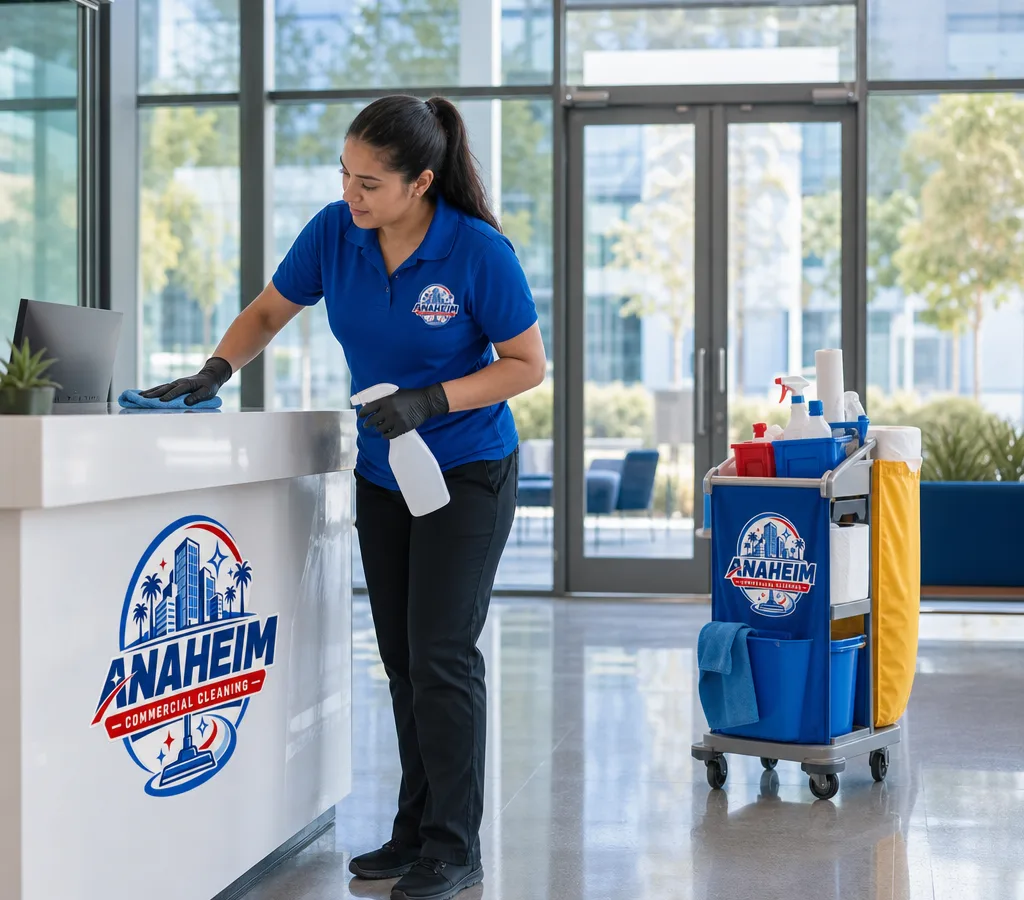
Restrooms are the most common complaint in restaurant reviews. We clean them to a fixed sequence: dispensers filled first, fixtures and touchpoints disinfected, floor last, with attention to the grout at the base of the toilet and urinal where odor originates. Restroom tools stay with restroom work and never move into the kitchen or dining room.
Check Availability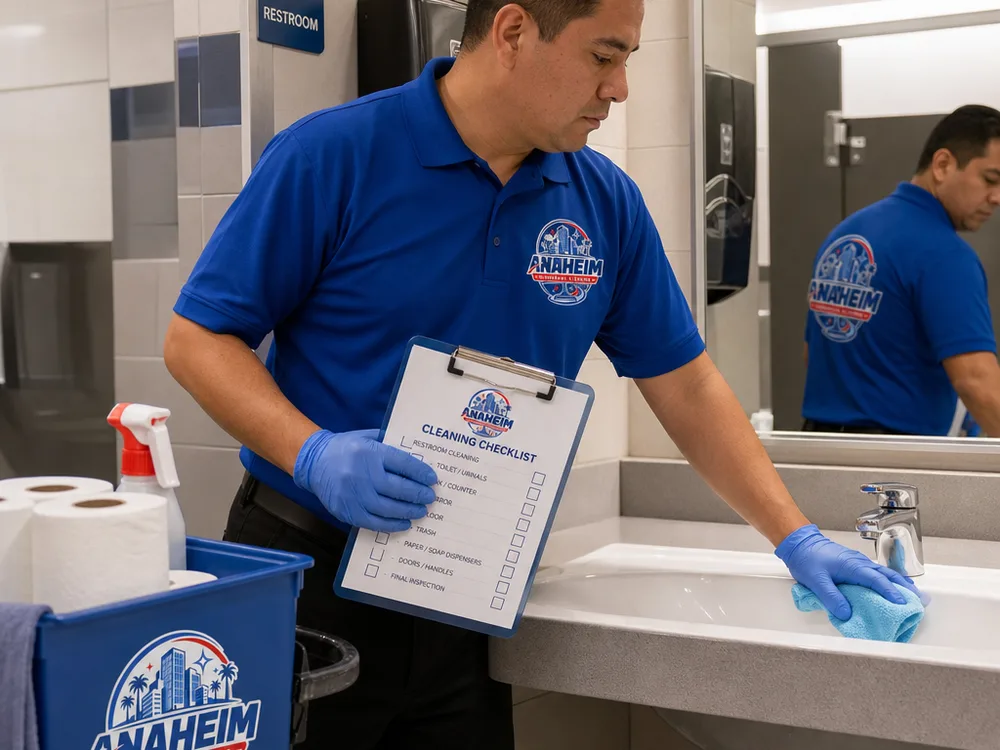
Inspection readiness without the scramble
County health inspections are unannounced. A kitchen cleaned consistently does not need a scramble; a kitchen cleaned when there is time does.
The items that cost points are predictable: grease and debris under and behind equipment, soiled wall and ceiling surfaces, dirty floor-to-wall junctions, non-food-contact equipment surfaces, and restrooms without supplies. Every one of those is cleaning scope rather than construction. We build the nightly checklist around them and leave a signed log so you can show what was done and when.
Food-contact surfaces, sanitizer concentrations, cutting boards, and anything involving food handling stay with your staff. That line is deliberate. Your team is trained for it and it belongs inside your own procedures.
Hood, duct, and exhaust: where our scope stops
We do not clean kitchen exhaust hoods, ducts, or rooftop fans. That is a licensed specialty handled by certified kitchen exhaust contractors, and it produces the documentation your insurer and fire inspector expect to see. Anyone offering it as a line item on a janitorial contract is worth questioning closely.
What we do handle is the boundary. The visible hood exterior and stainless surround, grease filters pulled and run through your dish machine on a set schedule if you want that, and the wall and ceiling surfaces around the hood that catch the overspray the hood misses. We will also tell you when filters are loading faster than your service interval suggests, since that is usually the first sign the exhaust cleaning is overdue.
Working around a kitchen that closes at midnight
Restaurants are the hardest schedule in the county. The building is occupied through the hours most cleaning crews work, and the window that does exist is short, late, and different on weekends.
- ✓Patterns we run: a nightly crew arriving after the final cover and working a fixed two to four hour window; a pre-open morning crew for operations that close too late to clean the same night; a split with light nightly service and one weekly deep degrease on the slowest day; or a day porter for high-volume locations that need restrooms and dining floors held through service.
- ✓We agree on an arrival window rather than a single time, because kitchens do not close on schedule. Crews hold keys or codes where you prefer, and we settle in advance who locks up and how alarm handling works.
What moves the price
Restaurant cleaning is priced on grease load and access, not floor area.
Menu and volume. A fryer-heavy or wok-heavy kitchen at high covers produces several times the surface load of a cafe or bakery.
Floor type and condition. Quarry tile agitated regularly cleans in a routine pass. Tile with years of buildup in the grout needs a restorative pass first, quoted separately.
The window you can give us. A four-hour clear window costs less per visit than two hours with staff still closing out around the crew.
Frequency. Six nights a week costs more per month and less per visit, and it prevents the buildup that makes periodic deep work expensive.
Periodic add-ons. Filter service, carpet and upholstery extraction, hard-surface floor restoration, and high dusting are quoted as separate line items so you choose the interval.
We walk the kitchen and dining room before quoting. A price given over the phone from square footage is a guess, and it usually gets corrected upward later.
Questions restaurant operators ask
Do you clean during service or only after close?
Almost always after close, with the line down and cool. We will staff a day porter during service if your volume needs restrooms and floors held, but the degreasing happens when the kitchen is shut.
Can you clean our hood?
No. Hood, duct, and rooftop fan cleaning goes to a certified kitchen exhaust contractor. We clean the hood exterior and the surfaces around it, and we can pull and wash filters on a schedule.
Our floor is slippery even right after mopping. Why?
Residue, almost always. Mopping greasy quarry tile with a general cleaner spreads a thin film over the whole surface, and the film is what is slick. It takes agitation with a degreaser and a rinse to remove, after which a mop is enough to maintain it.
Will you service our grease trap?
No. Interceptors are pumped by a licensed hauler on a permitted schedule. We clean around and under the trap area and will flag it when it looks overdue.
What about the walk-in?
Walk-in floors, shelving exteriors, door gaskets, and handles are standard scope on a weekly or monthly cycle, coordinated with your team so product can be moved safely. We do not handle food product.
Do you bring your own chemicals and equipment?
Yes, including kitchen-rated degreasers and floor machines. If you have franchise or brand specifications for products, we will use those instead.
Tell us your concept, your cover volume, your closing time, and your floor type.
Check AvailabilityGet a quote for your restaurant
We will walk the space and put the scope and the price in writing. Anaheim Commercial Cleaning, 4091 E. La Palma Ave, Anaheim, CA. Call 657-999-1949.
Request a quote
Tell us about your facility
Send the building type, approximate size and how often you want service. We will reply with a walkthrough time.